
Rooterran Dual Cycle
Extend materials. Keep carriers moving.
Rooterran's dual cycle: reusable packaging and recyclable materials. Pallets complete many trips, and the plastic from retired pallets enters the next round of production.
Overview
Two connected cycles
Rooterran's dual cycle consists of two connected systems. The carrier cycle reuses 1210 plastic pallets in the pallet pool, restoring them through collection, inspection, repair and cleaning. The material cycle handles pallets that can no longer be used, together with recycled plastic, turning them back into pallets through PCR recycling & sorting, pelletizing and injection molding.
The first reduces the number of new carriers needed for each trip; the second reduces material loss and supplies recycled feedstock.

Material cycle
Extend materials
The material cycle controls recycled-plastic quality at the source — own material intake, own injection manufacturing and closed-loop operations — so that retired pallets and recycled plastic go back into pallet production.
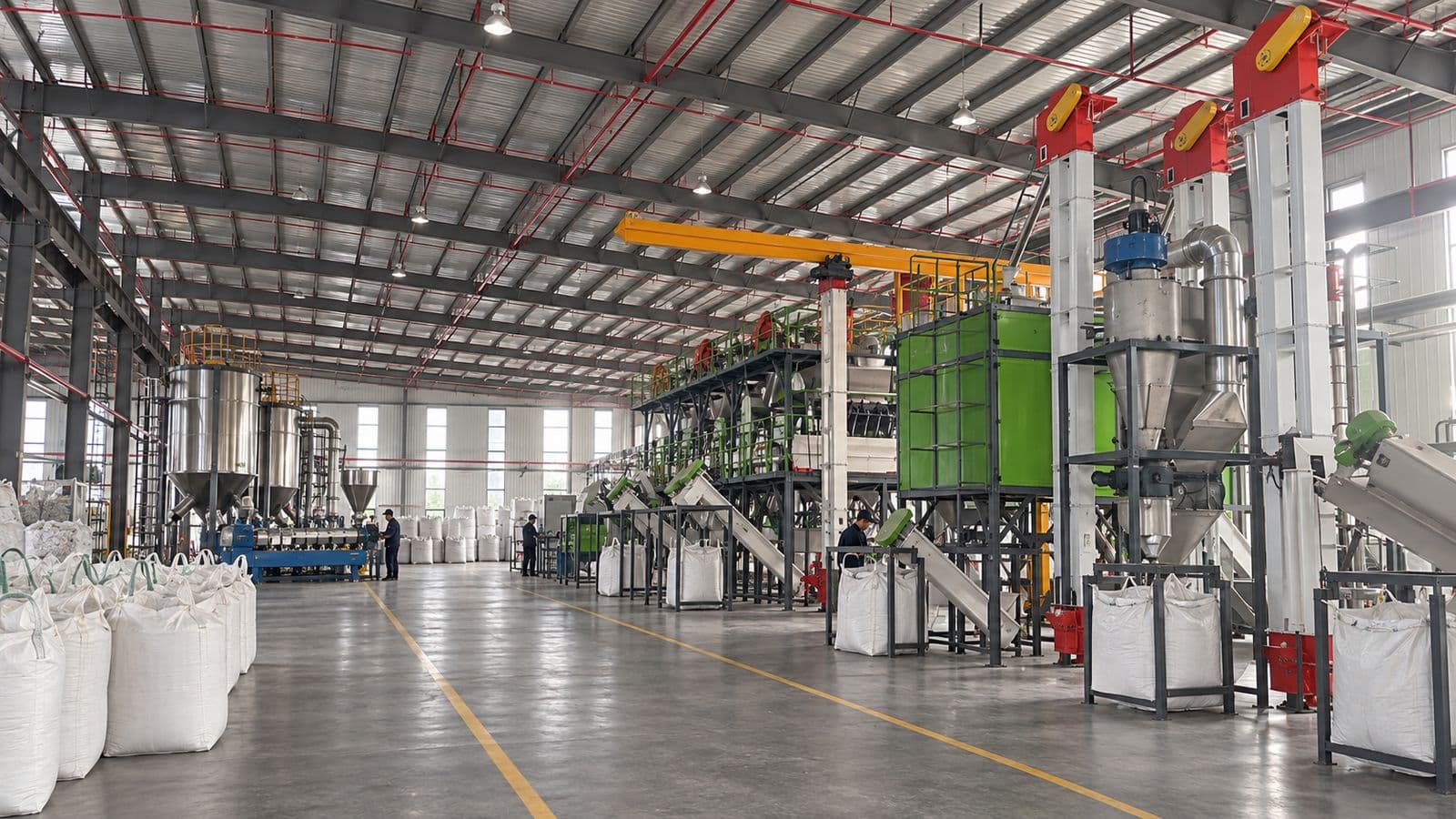
01Sorting
PCR recycling & sorting: controlling recycled-plastic quality at the source with a standardized system.
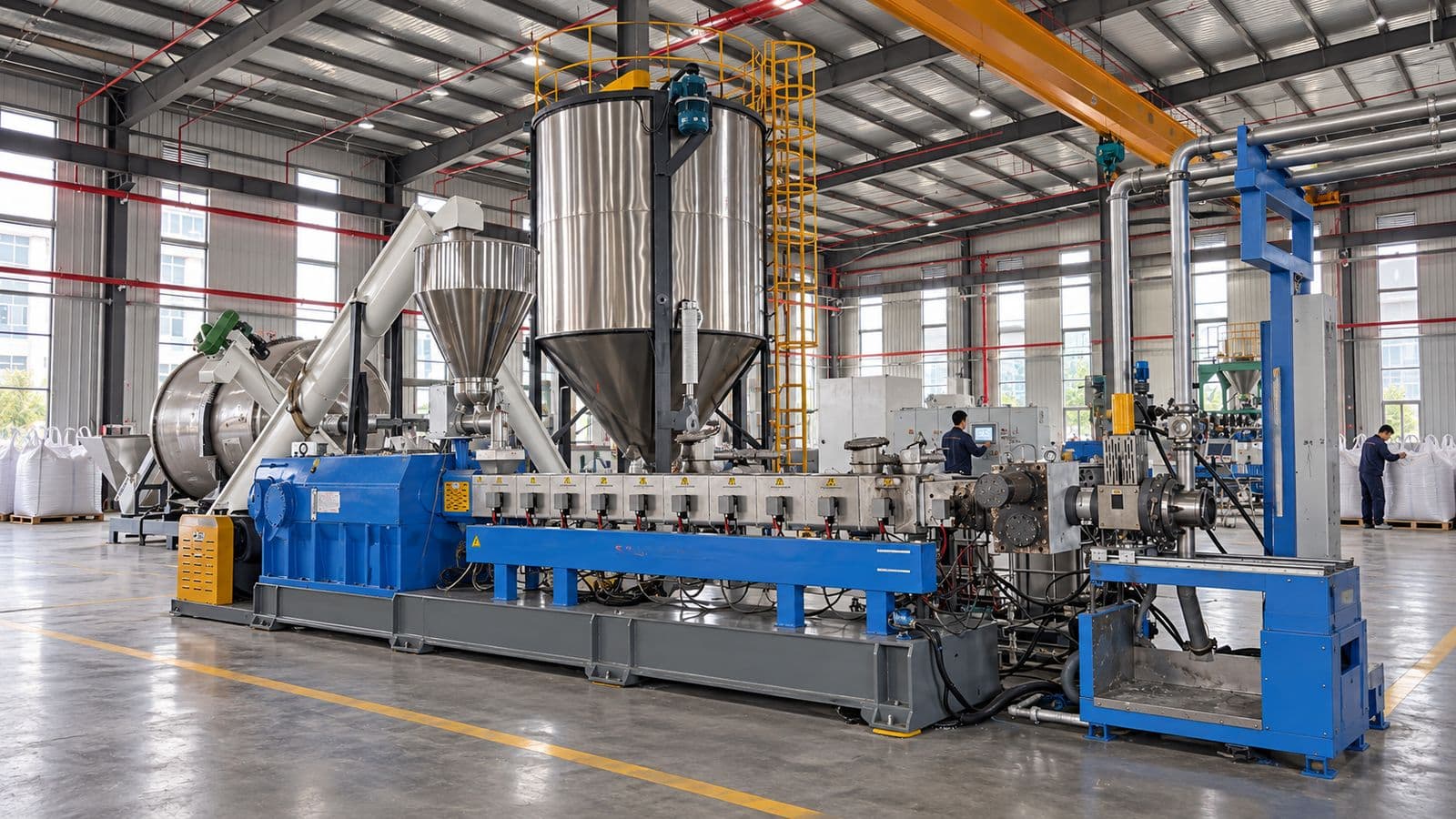
02Pelletizing
Recycled material is pelletized into feedstock ready for compounding.
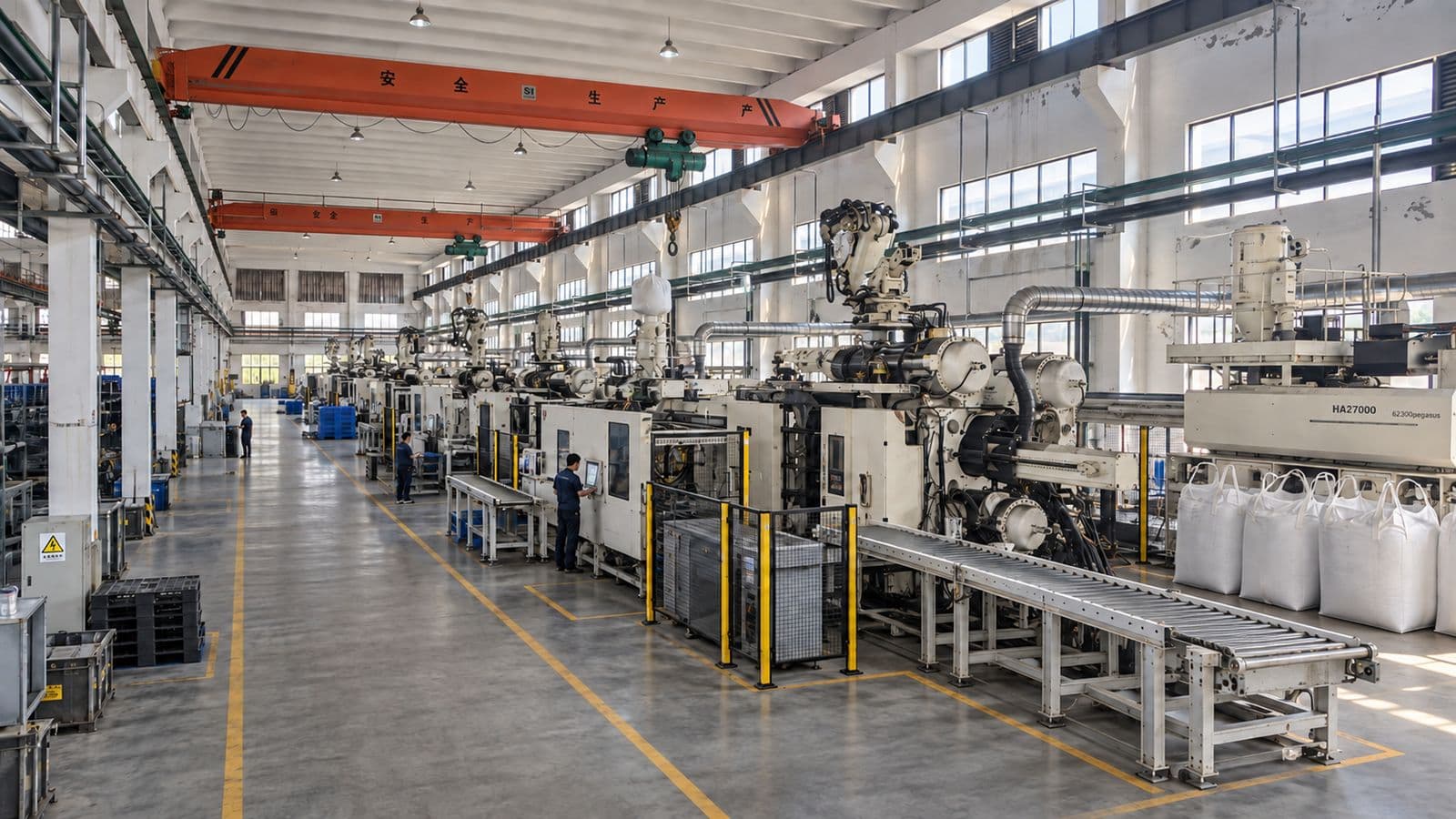
03Injection
High-strength injection molding designed for circulation, under strict quality control.
Own material intake
Sorting & Purification
Own manufacturing
Owned Injection Lines
Closed-loop operations
Circular Operations
Recycled feedstock
Why recycled feedstock matters most
F-A1 uses 100% PCR recycled material: production emissions at the raw-material stage can fall by up to roughly 70% (a theoretical upper bound, pending measurement for F-A1).
In a life-cycle study of plastic and wooden pallets, the partial production carbon footprint of one virgin HDPE plastic pallet is about 62 kg CO₂e: about 44 kg from the HDPE raw material and about 18 kg from production electricity. The raw material is roughly 70% of the total (44 ÷ 62 ≈ 71%).
Rooterran's F-A1 pallet uses 100% PCR recycled material, so the virgin HDPE raw-material emissions are fully replaced by recycled pellets. The actual reduction equals those raw-material emissions minus the recycled pellets' own emissions: raw-material-stage reduction ≈ 44 − (recycled-pellet emission factor × material used), where the recycled-pellet emission factor is still pending. This is the carbon meaning of “extend materials”.
- This is the raw-material share at the production stage (partial, cradle-to-gate), not a full life-cycle reduction rate
- Recycled pellets still carry emissions from sorting, washing and pelletizing, so raw-material emissions do not fall to zero; the recycled-pellet factor is pending, so no final percentage is given
- The pallet in the study is not Rooterran's F-A1; 44 kg is the study pallet's value, and F-A1's actual material use and emissions are pending measurement
- This example uses F-A1 only (T-series is also 100% PCR recycled plastic but is not included here); the F-A5 Sealed Flat pallet is externally sourced virgin material, makes up a small share of the pool, is sold at residual value at end of life, and is not included in the carbon example
Partial production carbon footprint · kg CO₂e (GWP100, fossil)
Virgin HDPE plastic pallet · Σ ≈ 62
Raw-material share ≈ 71%
Wooden pallet (reference) · Σ ≈ 5
wood 3.5 · nails 1.3 · electricity 0.12 · heat 0.0078
| HDPE raw material | 44 |
|---|---|
| Production electricity | 18 |
| Wooden pallet (reference) | 5 |
Data source: Kočí, V. (2019). Comparisons of environmental impacts between wood and plastic transport pallets. Science of the Total Environment, 686, 514–528, Fig. 3 “The partial carbon footprint of one wooden and one plastic pallet” (GWP100, fossil). https://doi.org/10.1016/j.scitotenv.2019.05.472 . Chart redrawn by Rooterran from the paper's values.
Carrier cycle
Keep carriers moving
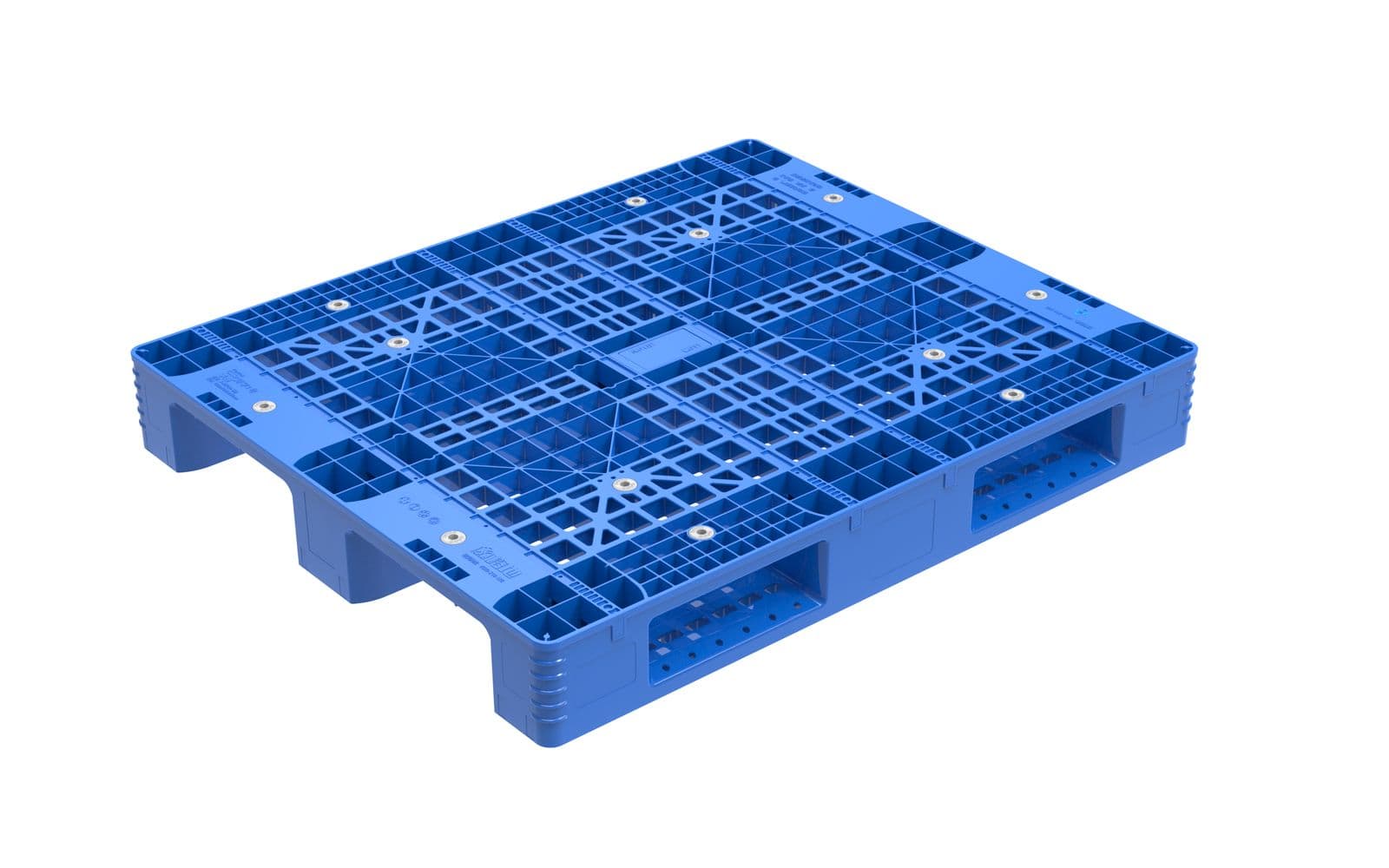
The carrier cycle aims for the same pallet to complete many qualified trips, extending its service life. Rooterran's pallet pool currently offers three 1210 pallets: F-A1 Grid 3-Runner, F-A1 Grid 5-Runner and F-A5 Sealed Flat. F-A1 is 100% PCR recycled plastic; F-A5 is externally sourced virgin material.
- 01Issue pallets
- 02Load & ship
- 03Hand over on receipt
- 04Collect empty pallets
- 05Inspect & grade
- 06Repair and clean as needed
- 07Re-issue qualified pallets
Pallets whose performance cannot be restored move into the material cycle.
Static rental mainly serves a customer's turnover at a fixed site; dynamic rental mainly serves multi-node transport and cross-site collection (source: Rooterran, “The Road to Lower-Carbon Reusable Packaging” (《可循环包装减碳之路》), 2024-05-23, p. 14). Actual service scope, rates, handover responsibility and loss compensation are set by contract.
Running this process requires unified asset coding, handover rules, service quality requirements and node ledgers. EcoNode digital identity can help with tracking, but operating records must still cover unscanned, lost, damaged and scrapped events.
Connection
How the two cycles connect
A
Carrier cycle
Effective trips spread manufacturing input
Retired pallets → material cycle
Recycled feedstock → new injection-molded pallets
B
Material cycle
Separation and regeneration supply future feedstock
The value of Rooterran's dual cycle lies in linking reusable pallets and retired-material management into one traceable operating system. The carrier cycle spreads manufacturing input over effective trips; the material cycle supplies future feedstock through regeneration.
Results should be judged by the emissions and total cost per qualified trip, and by the material that actually flows back.
Carbon effect
Measuring carbon properly
The carbon effect of a reusable solution depends on the actual number of uses, the collection network, cleaning and repair inputs, and the recycling process. We follow the ISO 14067 life-cycle approach to carbon footprints and use kg CO₂e throughout. The wooden-pallet example below is unrelated to any specific Rooterran product; it only illustrates how reuse spreads manufacturing emissions.
4 kg CO₂e/trip
Single-use wooden pallet, used once
0.41 kg CO₂e/trip
Unrepaired wooden pallet, assumed 11 uses
0.18 kg CO₂e/trip
Repaired wooden pallet, assumed 33 uses (incl. 0.84 for repairs)
Source: Rooterran, “The Road to Lower-Carbon Reusable Packaging” (《可循环包装减碳之路》), 2024-05-23, p. 4 (“average carbon footprint” row of the original table). Numbers of uses and emission factors are assumptions in the original document and have not been third-party verified; the original's wood sub-items and total differ by about 0.2.
General model: emissions per trip for a reusable solution E = C / N + r, where C is the carrier's manufacturing emissions, N the effective number of uses actually completed, and r the extra emissions per trip for return, cleaning, repair and disposal. Reuse is lower-carbon only when E is below the single-use per-trip emissions B, i.e. N > C / (B − r); if r ≥ B, more uses cannot create an advantage.
Carbon projects should therefore verify actual turnover, return loading and losses first, rather than relying on the maximum lifetime a product claims.
Pilot & verify
Start with a pilot
High-frequency lanes with stable return routes are good candidates for a reuse pilot; low-density lanes or lanes with poor return conditions should also be assessed against single-use options (source: Rooterran, “The Road to Lower-Carbon Reusable Packaging” (《可循环包装减碳之路》), 2024-05-23, p. 16: high volume and frequency — on-site service from a distribution center; moderate volume — a contracted service point; very low volume — single-use packaging). Selection criteria include total cost, life-cycle emissions and delivery quality.
01
Set a baseline
Pick real lanes and goods; record single-use packaging volume, transport, damage and disposal.
02
Define the pilot
Match packaging size, nodes, cleaning and repair requirements and handover responsibility; set up asset coding and scrapping criteria.
03
Build a real ledger
Keep recording each unit's effective uses, collection, losses and maintenance; report measured data separately from lifetime forecasts.
04
Decide on scale-up
Re-check cost and emissions under equal service conditions and decide lane by lane; close the loop on retired material with weighing and recycling-destination records.
These are suggested steps; they do not mean these steps have been completed or measured results achieved. Renting can reduce packaging purchase spend, but rent, deposits, return transport, management and loss compensation may still apply.
Outlook
How we communicate results
Our public position: through packaging reuse and material recycling, we explore ways to lower life-cycle emissions. Specific reduction rates will be published once product inventories, operating data and a consistent accounting method are in place.
Evidence still to be provided
- · Bill of materials, manufacturing energy use and electricity factors for F-A1 / F-A5 pallets (self-weight and loads: see Products)
- · Source, year, region and system boundary of factors for HDPE / PCR recycled material, single-use wooden pallets and cartons
- · Actual lifetime distribution, effective trips, loss and damage rates, repair counts and cleaning resource use
- · Outbound and return distances, vehicle load factors and transport-emission allocation method
- · Recycled-pellet emission factor (sorting, washing, pelletizing), recycled-content composition and yield, and performance tests of multi-generation recycled pallets
- · Collection agreements, actual collected quality, recycling-destination evidence and the allocation approach for reduction accounting
References
- Rooterran, “The Road to Lower-Carbon Reusable Packaging” (《可循环包装减碳之路》), 2024-05-23 (pp. 4, 14, 16)
- Kočí, V. (2019). Comparisons of environmental impacts between wood and plastic transport pallets. Science of the Total Environment, 686, 514–528
- ISO 14067:2018
- Deviatkin et al., Wooden and Plastic Pallets: A Review of LCA Studies, 2019
- UNEP Topic Sheet: Reuse Schemes
- OECD Global Plastics Outlook, 2022